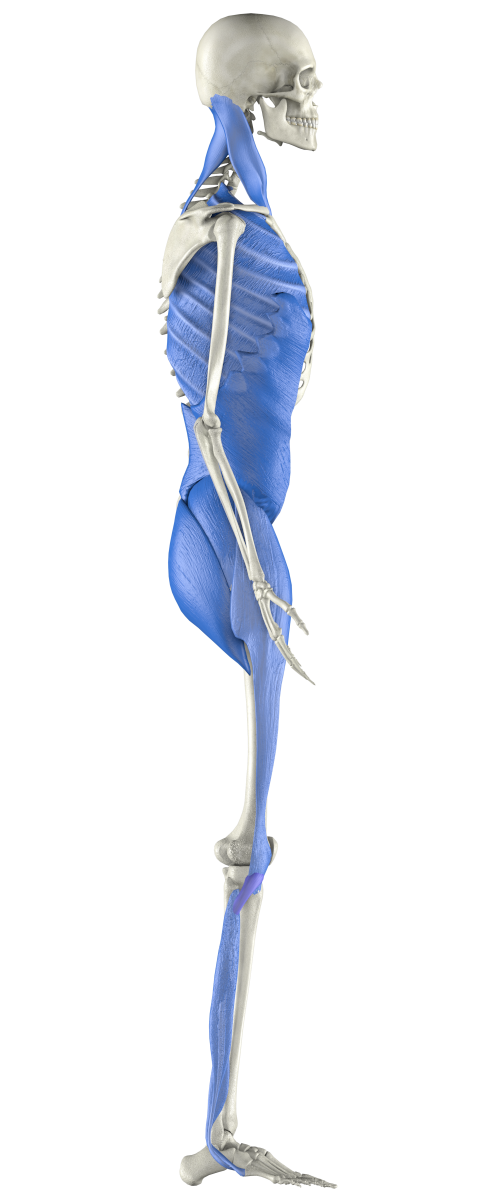
Pain in the side of the hip is very common. Oftentimes, people can tell the side of the thigh is also involved, but the pain is usually right at the side of the hip or slightly above it. Pain can also radiate back into the gluteal muscles, thereby indirectly involving the piriformis. If you have been told you have piriformis syndrome, tight glutes, or iliotibial band syndrome (ITB Syndrome), it can be treated using laser therapy.
Why do I like to start with the back of the calves first? Because when a person’s body is bent forward at the hips/waist, they feel pain in the glutes and outside hip because these muscles are trying to hold the person upright as best they can. But this is the classic compensation type thing. Instead of trying to treat the compensation, treat the person’s forwardness.
If you’ve seen an elderly person being bent forward at the waist, you know what I mean. Granted, you’re probably not at this point yet, but you’re still being pulled forward and probably notice you have to work to stand up straight. Standing up straight isn’t easy; it takes effort. But if your hip flexors are tight, your back muscles and glutes have to work to keep you upright, hence they can hurt.
It’s fairly easy to show this to people when they come in. If they have pain in the side of their hips or in their glutes, I work the back of their lower legs for 10 to 20 minutes and have them walk around. They can usually tell that the hip is looser in the front, and they’re not being pulled forward nearly as much on the same side that I lasered. They usually then feel the pulling-forward problem more on the non-treated side because of the big change made on the treated side. It proves the point, however.